Zim and Joey

Zim and Joey

Monday, August 31, 2015

Exoteric And Esoteric


                                                    Exoteric And Esoteric
 
                                            
                          The Meaning <b>of Esoteric</b> and <b>Esotericism</b> | GnosticWarrior.com

                          “The eye through which I see God is the same eye through which God sees me; my eye and God's eye are one eye, one seeing, one knowing, one love.”   Meister Eckhart


Let's explore the difference between surface and depth, this is in order to describe the difference between mere survival vs. living fully, being really happy, and making a genuine contribution. The exoteric aspect of reality is just the surface, tip of the ice burg, cover of the book, symptoms, and first impressions or instinct. This is where our ego is useful, and gets us in the door with a person, place or thing. After we're in, we want to be able to navigate, read the book, get our bearings, and optimize our experience, this is where the esoteric comes in.


If we look at traditions such as initiations, rites of passage, magic, witchcraft, shamanism, mysticism, mystery cults, etc., we will see the philosophy, psychology, and practical application of transformation, that is to say, having an intentional effect on people, places, and things that is aligned with values and perspective. Psychotherapy is a modern practice that is about healing and wholeness, and includes the esoteric if it is to be effective, otherwise you will just get a kind of short term relief of symptoms, which is how we are conditioned to live in our culture. Our culture is one of immediate, short term, instant gratification, but this is never fulfilling for long, and people will seek out, often unconsciously, more depth, meaning, and experience in a variety of ways, many of them self-destructive. Addictions of all kinds fall into this category.


The philosophy of transformational practice is the theory, ethics, and conceptual framework or ideas behind the particular transformation. You can get a general idea of many practices such as Wicca, Buddhism, Christianity, Cabala, Tantrism, Dreaming, Meditation, Psychotherapy, etc. as practices to achieve Self-Realization or Self-Actualization. That is, coming to understand our own inherent Divinity through the nature of the mind. This doesn't really get us very far, but it is important to have some kind of philosophical underpinnings, or model/blueprint, to frame a practice and approach, much like laying the foundation of a building. Remember, the map is not the territory!


The psychology of a practice takes us deeper into the symbolic and relational aspects of a transformational practice. If we look at nature mysticism, we could take dreams, mandalas, or objects from nature, and explore our insights, connections and personal meaning in relation to these symbols. Psychology also deals with perception, cognition, attention, emotion, intelligence, phenomenology, motivation, brain functioning, personality, behavior, and interpersonal relationships, including psychological resilience, family resilience etc. Good psychology considers the unconscious, both individual and collective, this helps establish causal and correctional relationships between psychosocial variables.


Finally, the esoteric, must deal with practical application, discipline, skillful means, and getting results, otherwise it remains abstract and purely conceptual, which is where a lot of people in the West like to hang out. There's an old joke about Episcopalian's that says "if given the choice between going to Heaven and going to a lecture about Heaven, an Episcopalian will take the lecture."


A practice is just that, something you practice, get instruction, acquire skills, follow injunctions, e.g. “if you want to quite the mind, meditate.” The practical aspects must have a feedback mechanism whereby you are getting objective information about what's working/not working and adjust your practice accordingly. This is also how science of any kind works, which is an empirical methodology that involves; asking a question, forming a hypothesis, making predictions, doing experiments, analysis of results, and communicating results. Whatever your practice, it is a slow and steady process, anyone or anything that tells you you can "get it quick" is lying, however, you can accelerate your journey, but be cautious about pacing, the point is to enjoy the journey!


So whatever your practice or interest in the esoteric, deeper aspects of life, make sure you are including a philosophical, theoretical model complete with ethical values, a depth psychological understanding that includes the symbolic and relational aspects, and a practical aspect geared toward getting results, gaining fulfillment, and contributing to the greater whole, this is an integral approach to happiness and peace.
 
                  “Theologians may quarrel, but the mystics of the world speak the same language.”  
                                                                                             Meister Eckhart
 
 
                    Buddhist monks say they feel at one with the universe, but it may just ...

Friday, August 28, 2015

The Great Self


                                                 The Great Self…...for Pieter
 
 
                                William Bloom , a western spiritual teacher connected with the ...
                                    
                                        “Harry - you're a great wizard, you know."
"I'm not as good as you," said Harry, very embarrassed, as she let go of him.
 "Me!" said Hermione. "Books! And cleverness! There are more important things - friendship and bravery and - oh Harry - be careful!”   J.K. Rowling


Harry Potter is a story, in part, about a kid who is out of touch with his Great Self, in this case symbolized as a great magician. This is very much a question of true identity, the big Who question. Harry has to awaken to his birthright, and make the heroic journey to learn how to embody his magical greatness. There are a lot of stories along these lines such as the lion raised by sheep, The Prince And The Pauper, Vasa Lisa, The Frog Prince, King Arthur, and many more. These stories are all symbolic of the psychological journey to contact and awaken to one's Great Self.

Everyone is guilty at times, of being too hard on themselves, devaluing, negating, not giving themselves enough credit, or not appreciating themselves fully. This is because of our distorting of the Puritan concept of humility being something whereby you shouldn't feel pleasure, and if you feel good about yourself and express it in any way, you are sinning. The Puritan's gave us many culturally infused gifts like self-hatred, turbo repression, manifest destiny, and the “work ethic.” What people usually mean (especially managers), when they use the term work ethic is that they want you to martyr yourself, always work harder/longer/with less pay, and smile while you're doing it. This has nothing to do with being fulfilled, appreciated, and well compensated for your work, and making sure that work doesn't become the dominant part of your life.


So let's look at a possible description of the opposite of all this, which is self-love taken to it's logical conclusion. This is what we want for our children and dogs, which is to fully appreciate and be who they are, and to never apologize or feel guilty about who you are. You may feel guilty about something you've done (especially if you're a dog!), but never about who you are. This is what we all tell our friends whenever they're struggling, we say; “Just be yourself,” “You're great just the way you are!” This is unconditional love.


C.G. Jung had the idea of the Great Self, which is at the center of the psyche and is the origin of our ideas about God. Theologically, this comes out as “we are made in God's image, or the Kingdom of Heaven is within you, or become as a child to enter Heaven,” etc. This Great Self is the Axis Mundi, and the cornerstone of our ability and desire for wholeness. Dreaming is a symbolic language of the Self, always processing a narrative that moves us toward wholeness, if we bring consciousness to the unconscious. For one who's center of gravity is in the Masculine, this is an inner marriage with one's Anima (the Feminine energy). Jung only wrote about this on heterosexual terms, but in my view, it includes any gendered form of relationship or sexuality.


This Great Self is also our Higher Power in 12-Step terms, it is something that includes, but transcends the ego. We all need an ego, to help us put our pants on and get us to go to work everyday, but the ego shouldn't be driving the bus, or you will become Donald Trump!


The Great Self can be seen archetypally, as the integration of the King/Queen, Warrior, Magician, and Lover archetypes. This is a fullness of one's ability for Self leadership and vision (King/Queen), the energy and capacity to get things done and be disciplined (Warrior, who takes orders from the King/Queen), the intuitive, esoteric knowing of the Magician, and the one who appreciates Beauty and is passionate about life.


This Great Self requires sacrifice, this is the source of all the sacrifice mythology we have in religion and many other areas. A submission and surrender is required, this is the meaning of the word Islam, the submission brings one in contact with the Divine Self which is an experience of intoxicating ecstasy. We easily feel some of this intoxication when we are feeling really good about ourselves, it is a natural state, and we used to have it a lot of the time as children, unless we were abused.


The natural state is why sexuality is such a sensitive, delicate, and powerful experience if it is seen as a sacred act, because we are literally baring our souls and bodies in the most open, vulnerable, loving, and beautiful way and giving that to another. This also creates an ecstatic intoxication in which we transcend our ego and merge with another.


The ego gets extremely nervous with all this Great Self business, because it is an exposure of the ego's game which is to stay separate and superior, like the Wizard of Oz behind the curtains. Even when the ego is helping us to feel like scum, it is still a subtle type of superiority (I'm lower, worse off, and more degenerate than all of you!)


There is a wonderful Russian story of Vasa Lisa, in which an adventurous male is captured and about to be boiled in oil. He runs free from his captures and willingly, sacrificially jumps into the boiling oil. He is transformed into a golden Knight with a thunderous voice and he comes to take his bride, the beautiful Vasa Lisa.

The King, having observed all this great transformation says to himself; “If a lowly adventurer is thus transformed, how much more will a King such as myself be?! (cue the ego police siren). This is the King's ego kicking in, and he becomes King soup when he jumps in the oil.


The story is about the arduous journey toward the Great Self, it is a heroic journey to fully embrace and love yourself, even the dark and dirty, muddy and bloody parts of yourself. To appreciate and accept who you are, and to see this as magnificent is what self-actualization is about.


So experiment with self-acceptance and notice any self-judgment without judging the judges, just be aware that we all have some self-negation, it's part of our culture, but we don't have to have that as our primary script! Try letting someone know (you could start with your dog or child), how truly awesome you are, it's the message we give to those we love, why not give it to ourselves?
 
 
                                       Baba yaga & Vasa Lisa

Thursday, August 27, 2015

Who, What, And How?


                                                Who, What, And How?


                             <b>Rodin’s</b> <b>The Thinker</b>


                                    “It is neither good nor bad, but thinking makes it so.”

                                                                                          Shakespeare


One of the many aspects of human life that is rapidly being lost in my view is the ability to think well. The subject of critical thinking is not paid much attention in our educational systems (although there have been more attempts lately to nurture this essential life skill in children). We are a culture that is rapidly dumbing down, even though we have more and more information and exchanges via our cell phones, computers, social media, etc., we are coming to know more and more about less and less. Wisdom in particular, is almost something that is nostalgically “cute,” but useless as far as knowing the latest sound bite.


Let's take a quick and dirty intro to an approach to how to think better and be wiser in our transactions and apperceptions of human life. If we approach thinking with a Who, What, How big three lenses, it will get the ball rolling.

I intentionally leave out the question Why, Why you may ask? Because why is a question that leads to endless speculation, inferrence, debate, and pretense of rationalization and explanation. This is where I differ from a lot of therapists that are endlessly interested in a person's history which they use to explain and understand the client, I'm much more interested in Who, What, and How.


To look at who is to look at a source that begins with bias, whether it is yourself or anyone else, whomever is speaking, writing, researching, teaching, etc., they have a particular agenda they are promoting. I am promoting one right now, and you are promoting one by reading this. To assess the who part of the equation is to ascertain a degree of reliability of credibility of what's coming out of the horses mouth so to speak.


In science, we want to know who did the experiments, where did the funding come from, who published the results, and who is reading and promoting the outcomes. The What is about the content of speech, the context of experiments, the results, the essential nature of what is written. It's always deeper than face value, or the cover of a book, or someone's image or status, we always have to look deeper than the surface to find out what's really going on, it takes time, multiple perspectives, and feedback from different sources about what's working/not working.


Lastly, and maybe most importantly, is the How, which is about the process. Are we having fun yet? is a process (How) question, and a very important one. How we are doing an experiment or intervention is very important, the tools, the models, the ways of measuring are very important. There are fundamental bias in every How methodology. If we're using Newtonian physics, we are believing there is some force acting at a distance to create gravity, if we're using Quantum thinking or Relativity, we're thinking it's the curvature of space that explains gravity. Either view doesn't really give us a description of gravity, they're just useful ways (How's) of doing business. One can put a man on the moon, the other can use GPS to get us home. How we're going about something is crucial to success, if we don't stop from time to time and reflect, we get locked into our How and think it's the only game in town.


So the Who, What, And How are very abstract here with some intention. This is because one of the main goals of critical thinking is to help people to think for themselves. Whenever I'm working with clients or writing, or being silly with a group of friends, there's always an impish agenda to cheer people on to think for themselves. This is because we live in a culture of sheep, that are raised to follow the leaders and authority, the one's whose job it is to know and take care of us, and we spend little time really reflecting and looking deeper. This is why a person like Trump can be the #1 news item, getting away with all his shenanigans, and be soaring in the polls, it's quite a reflection on the times we're living in and our culture!


So pay attention to the Who, What, And How of your everyday living, ask yourself pertinent questions like; “Who am I really?” “What is my purpose?” and “How am I going to live my purpose?” Listen and watch, for the answers will come!
 
 
shutterstock_107151173.jpg

Wednesday, August 26, 2015

Ecstasy


                                                     Ecstasy


It was clear to me that the sole function of psychiatric science was to divert attention from a true elucidation of the sexual conditions of existence.”

Wilhelm Reich

(The Function Of The Orgasm)


You know you're getting closer to some (as yet disclosed aspect of truth), when people at certain times, and in certain institutions, burn your books, imprison, and try desperately to silence you. This was the case with Wilhelm Reich and his post Freudian scientific writings about sexuality and politics.

Sexuality is highly misunderstood, misappropriated, repressed, etc but it is clear to me that the biopsychosocialspritual aspects of human sexuality is about as fundamental as we can get on what it is to be human. Let's explore just one nuance of sexuality which is the psychology and mythology of ecstasy.

The Greek God Dionysos is the god of the grape harvest, wine making and wine, of ritual madness, fertility, theatre and religious ecstasy in Greek mythology. Alcohol, especially wine, played an important role in Greek culture with Dionysus being the symbolic catalyst for states of intoxication that transformed and transferred one's ego beyond the individual to the larger group context. This provided a strong Feminine balancing to the masculine Apollonian aspect of Greek society.


This psychology of mystical intoxication is the basis for mysticism and the wisdom traditions such a the Eleusinian Mysteries (initiations held every year for the cult of Demeter and Persphone). The essence of ecstasy is the change in state beyond what one usually takes to be one's perceived identity, into new and strange places. The experience of going beyond, outside, and transcending one's sense of identity is blissful, the greater the degree and distance one feels from who they used to think they were, to who they feel they are now (Houston, can you hear me now?!), the greater the bliss! Although, of course, pacing and guidance are highly recommended!


Sexuality is a very deeply wired psychoneuroemotionalspritual part of our hardware that facilitates an experience in which one quite quickly moves outside themselves, and experiences a sense of unity (as well as a host of other feelings, thoughts, and perceptions). This is quite pleasurable, and nature has made us this way with good reason and design! Nature Herself can be seen as one big orgy!


In the West, we have our Garden of Eden story, which has been co-opted to induce guilt over our flow of natural energy in our bodies, minds and hearts. You can see how easily these natural human tendencies can quickly become psychological inducements to guilt, such as sexuality, eating, how one looks, whether one is likable or not, the list is endless, and hence the need for the field of psychosocial interventions both on an individual and social level.


Freud made his way into a Victorian society that was anti-Semitic, and so sexually repressed they put leggings on bare piano stools because they were deemed lewd and pornographic. He was a product of his times, as well as the limits of the field he was newly championing. Just his idea that the individual has a formative unconscious that impedes and interferes with our lives is a huge contribution (Jung would extend this notion into the collective unconscious.)We owe Freud a huge debt in my view, and I think he's really been misread/misrepresented, especially not read for the culture and times he lived.

 The post Freudian's, Anna Freud, Jung, and all that came after such as; Reich, Eric Erickson, R.D. Laing (not the singer), all the Gestalt folks like Fritz Pearls, the bio-energetic people like Alexander Lowen, somatic experience people (Peter Levine) that works with trauma and the body, mindfulness approaches (Jon Kabat-Zen), the list goes on and on, of healers and teachers that have been instrumental in helping people come back into their bodies and get beyond their guilt and disassociation from their natural state which is very ecstatic, like children and animals.

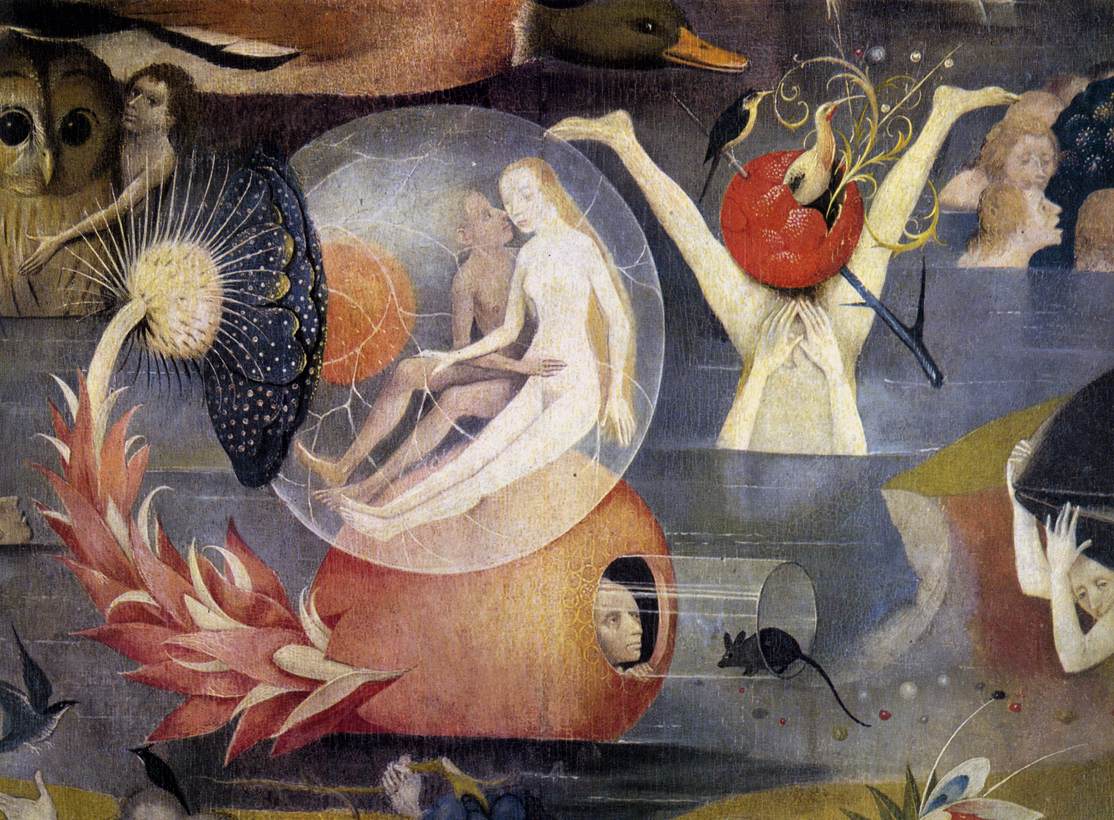
The Renaissance in the 14th-17th centuries can be seen as a return to the beauty and normality of human sexuality, as well as an embrace of the strong need for Feminine values and the aesthetic of Mother Nature Herself. As Joni Mitchell sang “We've Got To Get Ourselves Back To The Garden” of delights in being alive in a human body and having the ability to go beyond our own conditioning of who we are, which leads to ecstatic experience.

Make Love Not War!”


Sunday, August 23, 2015

The Exchange


                                                           The Exchange
 
 
                                        Giving and Receiving_0001
 
 
                                          "Give what you wish to receive."


   It is not without meaning and significance that the core of our economic system is called the “exchange,” as in stock exchange. The word exchange has multiple levels and connotations. As I've written about earlier, the evolution of science has been one of exchange, as in the relationships between two or more aspects of energy, matter, space, or time. This has been coupled with; forces, fields, instruments, skills, models, and philosophies. In many ways, science is coming around to it's origins of a natural philosophy, which is to say a deep investigation into the nature of Nature. Modern science, medicine, research, robotics, computer programmers, socio/evolutionary/ecological psychology, engineering, as well as the arts, politics, education and religion all have had to include consciousness as part and parcel to what they do. No one has been able to clearly define, or even describe what consciousness is exactly, but it's had to be included across the board!
 
 
Human life always involves exchange, no one moves or does anything without some impulse, conscious, or unconscious, of a need to exchange something. We get out of bed because we expect to give and receive something from the day, we speak, drive, eat, go to college, etc. all because we are motivated by some level of give and receive exchange likely to happen. Even the ultimate acts of negative exchange such as violence in all it's myriad forms, has a level of; intention that something will be gained in the exchange, even in circumstances of suicide. I am writing this blog, you are reading this blog because we both want something out of it, and we feel like we have something to contribute. People that have no interest in contributing are called sociopaths, they are just interested in "what's in it for me?"
 
So let's consider this exchange idea in terms of human transactions. There is an early field of psychology known as transactional analysis, books associated included the best sellers “I'm OK, you're OK.” and “Games People Play.” The ideas were that each interaction humans have is always a transaction, a give and receive, dynamic played between two or more, with rules, norms, and violations or unconscious scripts.

Most people are running scripts that have been literally programmed into their software from very early. We have data banks, retrieval relays, triggers, buttons, and automatic cause and effect, associations, and reflexes of feelings, thoughts, words, and actions. This is what's called an ego, personality, or persona. This persona. serves us well in life navigation, (up to a point, and then things go all to hell!) particularly social exchanges. Anyone who observes primates, or pretty much any life forms, observes there is a constant exchange happening between all objects within any given environment.

The field of ethology is the study of animal behavior, usually with a focus on behavior under natural conditions, and viewing behavior as an evolutionarily adaptive trait. But ethology is not just how animals behave, it is also a field, (if one is any good at it) of the internal subjectivity of the animal in their environment, for as Darwin made crystal clear, mammals are emotional and social in their environments and social structures. Temple Grandin is a scientist that has specialized in understanding animals feelings, and she is highly sought after in many fields for her knowledge and skills. She has designed more humane ways of slaughtering animals at meat packing plants, which sounds very strange that someone who is able to commune with animals on that level, would be instrumental to helping to lead them to a more efficient and "comfortable" way to die. But I guess that's what Dr. Korvorkian was doing, as well as good vets that are tuned into how to euthanize an animal.

I would describe her abilities along the lines of Jane Goodal, or any person that has genuinely sought inter-species understanding and respectful exchanges, interactions and loving relationships. Temple is able to take the perspective of an animal and imagine herself in the animal's skin so to speak. This ability to take the perspective of another is the cornerstone of compassion, understanding, communication, and healthy exchange. Remember, I've written about the ability to take other perspectives is an important gauge of enlightening awareness and mastery. Ironically, one also comes to better understand ourselves and our kind better by understanding others. Incidentally, a Shamanic trance and journey is often one of inhabiting the animal body/mind/soul of another species and bringing something back from the exchange that bestows healing or guidance.


The amazing thing about animals in nature is, they are quite well suited to their environments, this is another understanding that Darwin's genius gave us. Man has been the only species that has ever existed that has been creating more and more disharmony between himself and his environment, even to the point of possible extinction! This has been in large part due to poor, disrespectful, and unconscious exchanges between himself and his environment, or even with his fellow human beings.


So, let's pay better attention to our exchanges, be nice and thoughtful to the dog (she'll appreciate it!), smile and speak to others, be kind and fluid with yourself (don't be so serious, seriously!), look into your own magic mirror and ask to have a respectful exchange with yourself, study your dreams, and love one another. This was the foremost commandment of Christ and all enlightened spiritual masters.


Friday, August 21, 2015

What You Put In My Hands


                                       What You Put In My Hands
 
 
                     GUWG-Prayer-<b>Open</b>-<b>Hands</b>


Ah, this precious love ritual we practice-

You say; “Close your eyes and put out your hands.

I am a child waiting, breathing, hoping and dreaming.

The gifts take time, like leaves, and smoke,

Aging, and wine.


The silence, the absence of sight,

The emptiness of my open hands.


Sometimes it is a small feather,

From a hurried bird, or a pebble carried by glaciers.

Yesterday it was the season's first acorn,

Green bodied, wearing a dimpled brown beret.


Sometimes it is a sea shell,

Who called you from rhythmic waves,

Sparkling light from a distant star.


Or the colors of marigolds, or bells and bulbs

Of blooms and vines that creep

Through my window sill.


They are coming towards me, and for me,

And from me, and through me.


You have poured into my life this constant flow,

Of time, of life, of love, and rhyme.


I hold you lightly in my open hands,

My heart, my eyes, my voice, my life.

The weight of your gifts is the gravity of my bones,

The inspiration of poems,

The sighs of exhalations,

Bringing us to the great belonging.
 
 
                      floating feather


Wednesday, August 19, 2015

Houston, Do You Read Me?!


                                        Houston, Do You Read Me?!


              <b>Houston</b> Photo: Mission <b>Control</b> Facility
 
                              “Houston, Tranquility Base here. The Eagle has landed.”
                                                                             Neil Armstrong


People, at times, accuse me of being "out there, Earth to Zim, beam me up Scotty," so I've written a few blogs on “Zim for Dummies,” which are intended in the vein of how to get the most out of this blog, so here's another post along those lines. This is where a writer is attempting a degree of transparency and disclosure with the hope of guiding the reader in understanding and self-discovery through the modeling of one who has invested a great deal in the process of awakening.


Just as counseling/psychotherapy is a process of self-discovery, so too is the writing and reading of material that is expressed with intentions of bringing more light, love, humor, and entertainment into a world with a lot of darkness, fear, seriousness, and poor quality entertainment! In working with clients, I'm always coaching them to not take themselves too seriously, and to find the absurdity and ridiculous nature of what we've come to call civilized society. This lends itself to a general lightness of being and openness to experience that tends to get closed down as we get older.


My writing is holographic in nature, which is to say there is no linear, cause/effect, time or goal orientation, each piece of writing is completely contained and will have the seeds of the totality of all my writings within it (including this one). Just as a single cell of our body contains the blueprint of our whole body, so too any particular essay will have enough information to clone my whole body of work. In Zen this is called “How you do one thing is how you do everything.” When I'm working with clients, I don't need them to tell me their whole detailed history, I can take one circumstance they present and we can extrapolate how this is representative of their whole life.

The reader will also notice that I write, speak and act as declarative as I can muster. I own and take full responsibility for what I write, even when it's complete crap! I am my own authority, reference, and model, I'm not looking for a justification for what I express. Emerson wrote; “Bravely speak the utmost syllable of your conviction, God will not have his work made manifest by cowards,” and “Speak (write) as if what you say is true for everyone,” or Gandhi’s proclamation to; “Act as if humanity depended on your every thought, word, and deed.” It should also be noted that there is; nothing new under the sun, and every artist, scientist, philosopher, politician, etc. is always standing on the shoulders of those who came before, as we're all begging, borrowing, or stealing everything we think is new and original.


Speaking as your own authority can be very off-putting to some, because we live in a culture that is dependent on external authority. Everyone wants to know your sources, references, evidence, and model you use to teach, do therapy, and exist. But the greatest thinkers, writers, teachers, and leaders are the ones who are their own authority. This is another coaching I do with clients who present with such insecurity, doubt, dependency, and self-negation. I try to help them see that they know who and what they are deep down, and they have the power and resources to know themselves and to be true to who they are. This is a contradiction to how we're socialized, which is to be; who we are not.


I use pictures because they point to another, deeper, more expansive form of communication that is symbolic. The pictures say much more than the writing, just as a dream, poem, song, painting, dance, or movie will say much more than any commentary about them. My writing uses concepts to go beyond concept, 90%+ of communication is non-verbal. I'm interested in facilitating experience, not concept, God knows we've got enough of that! So readers are encouraged to make contact with what they are able to experience in relation to the writing, not what they think about it.


These writings are each an individual meditation that can be contemplated and integrated into your being if you invest and set an intention to share my hope for awakening. If you work on integrating and incorporating what you glean and act in such a way that your behavior reflects your understanding, than you are truly participating in your own as well as others awakening, what could be more fulfilling?
 
            ... <b>flowers</b> start <b>blooming</b> in late spring and continuously <b>bloom</b> through